
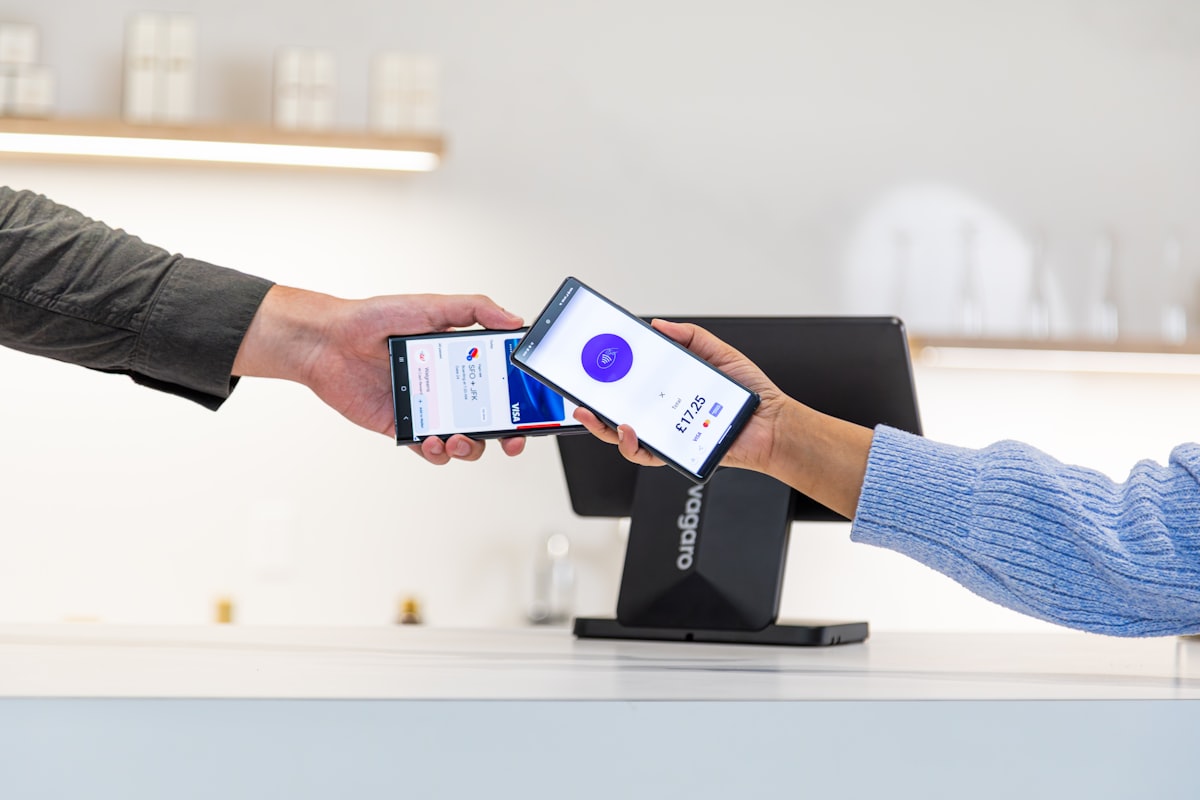
Tap to pay on phone vs card machine: which is better for UK businesses?
Written by Lee Hart
Tap to pay on phone vs. card machine UK: which is best for your business?
The UK's payment landscape is in constant motion, rapidly evolving from a cash-dominant society to one that champions digital convenience and speed. For businesses, keeping pace with these changes isn't just about adapting; it's about thriving. The rise of contactless payments has been meteoric, transforming how consumers interact with merchants at the point of sale. Today, businesses face a pivotal decision: embrace the burgeoning potential of tap to pay on phone technology or continue relying on established, dedicated card machines? Both offer distinct advantages, but understanding their nuances is crucial for making an informed choice that aligns with your business goals, customer needs, and operational realities. Many SMEs discover that the best solution isn't choosing one or the other — it's working with a provider like Stored that offers both flexibility options from a single platform.
The swift shift to contactless payment in the UK
The UK's embrace of digital and contactless payments has been nothing short of revolutionary. The decline of cash is undeniable; for the first time in 2024, cash usage fell below 10% of all payments in the UK [UK Finance, 2025]. This seismic shift is predominantly driven by a growing consumer demand for faster, more convenient payment methods. Contactless payment has become the default for many. A staggering 94.6% of all eligible in-store card payments under £100 were made using contactless technology in the UK in 2024 [Barclays Consumer Spend Report, 2024]. Mobile wallet adoption reached an impressive 57% of UK adults in 2024, a significant increase from 42% in the previous year [Rapyd, 2025].
Understanding your options: smartphone vs. dedicated hardware
At its core, the decision between modern payment acceptance methods boils down to how you want to facilitate these increasingly popular digital and contactless transactions. You have two primary avenues: leveraging the technology already in your pocket via a smartphone with tap to pay functionality, or investing in a dedicated card machine. Each approach offers a different blend of mobility, cost-effectiveness, functionality, and customer experience.
Demystifying tap to pay on phone technology
Tap to pay on phone, often referred to as SoftPOS (Software Point of Sale), represents a significant evolution in payment acceptance. It fundamentally transforms a standard smartphone into a fully functional payment terminal, effectively eliminating the need for separate card reader hardware for basic payment processing.
What exactly is tap to pay (SoftPOS)?
Tap to pay on phone technology enables a merchant to accept payments using a compatible smartphone or tablet, completely eliminating the need for an external card reader or card machine. This functionality is made possible through NFC technology (Near-Field Communication), the same contactless system that powers most modern credit and debit cards, as well as popular digital wallets like Apple Pay, Google Pay, and Samsung Pay. The payment processing software is integrated directly into the merchant's device. This technology is available on most modern Android devices and recent iPhones (iPhone XS and later).
The tap to pay transaction flow
The transaction process is engineered for remarkable speed and simplicity. When a customer is ready to pay, the merchant initiates the sale within their payment app. The app then prompts the customer to hold their contactless card, smartphone, or wearable device near the back of the merchant's phone. The NFC technology communicates wirelessly, securely transmitting payment data. For transactions exceeding a certain threshold (typically £100 in the UK), the customer may be prompted for PIN verification directly on the merchant's device via PIN on Glass. Advanced security features like tokenisation protect sensitive customer card data throughout the process.
Key business benefits of tap to pay
The primary appeal for businesses lies in its accessibility and unparalleled flexibility. Its most significant advantage is the drastically reduced barrier to entry; many businesses already possess compatible smartphones, significantly lowering the initial hardware costs compared to purchasing a traditional card machine. This makes it ideal for freelancers, sole traders, market stall operators, and businesses with mobile sales forces. The rapid growth of tap to phone adoption in the UK — a staggering 320% over the last year, significantly exceeding the global average [Visa, 2025] — indicates strong market momentum and increasing customer acceptance.
Understanding traditional card machines in the UK market
Traditional card machines, also known as POS terminals, have long been the backbone of card payment acceptance for businesses worldwide. These are dedicated hardware devices designed specifically for processing card and other electronic payments.
What is a card machine (POS terminal)?
A card machine is a dedicated electronic device used by businesses to process payments made via credit and debit cards. These machines connect to the payment network, allowing them to communicate with banks and payment providers to authorise transactions. They typically support multiple payment methods, including contactless card payments, chip and PIN, and sometimes magnetic stripe transactions.
Diverse types of card machines for UK businesses
The UK market offers a variety of card machine types. Traditional countertop terminals are ideal for fixed retail locations. Mobile card machines use cellular networks or Wi-Fi, offering flexibility for businesses that move around. There are also more advanced all-in-one POS systems that integrate payment processing with inventory management, sales reporting, and CRM functionalities.
Key business benefits of dedicated card readers
Dedicated card readers offer a high degree of reliability and are built for high-volume transaction processing. They often come with advanced features such as detailed sales reporting, inventory management integration, and the ability to handle higher transaction limits. For businesses with a steady stream of customers or higher average transaction values, the robustness and dedicated nature of a card machine can be invaluable. They are also less susceptible to interruptions that might affect a personal device.
Head-to-head comparison: beyond the basics for UK businesses
Initial investment vs. total cost of ownership (TCO)
The most apparent difference is the initial investment. Tap to pay on phone significantly lowers this hurdle, as it leverages existing smartphone hardware. Traditional card machines involve a tangible upfront cost for purchasing or a recurring lease fee. However, a comprehensive TCO analysis is essential. While tap to pay might have lower initial costs, transaction fees can sometimes be higher. Businesses typically pay between 1.5% and 3.5% per transaction on card processing fees [SumUp, 2025]. Understanding the full fee structure is crucial.
Operational efficiency and day-to-day use
Tap to pay excels in operational efficiency for mobile or agile businesses. Its setup is quick, and payments can be accepted anywhere with a signal. For businesses with a fixed location, a dedicated card machine or POS system can offer a more streamlined experience. Countertop terminals are always ready for use, and their dedicated nature means they don't rely on personal device battery levels.
Customer experience and payment preferences
With a significant majority of UK shoppers stating contactless as their favourite way to pay in-store [takepayments, 2025], offering this option is non-negotiable. Both tap to pay on phone and modern card machines facilitate contactless card payments, including those made via digital wallets like Apple Pay and Google Pay. Offering a choice of payment methods ensures you cater to a broader customer base.
Security protocols: protecting your business and customer data
Universal compliance: PCI DSS and industry standards
Both tap to pay on phone solutions and traditional card machines must adhere to strict industry standards, most notably PCI DSS. This ensures that sensitive cardholder data is handled, processed, and stored securely. Compliance is non-negotiable for any merchant involved in card payments.
Security features of tap to pay on phone
Tap to pay leverages advanced security features inherent in smartphones. Technologies like tokenisation are central to its security. When a customer makes a contactless payment using a digital wallet, their actual card number is not transmitted to the merchant — instead, a unique encrypted token is used. Authentication methods such as biometric data (fingerprint scanning, facial recognition) or device passcodes add extra layers of security.
Security features of traditional card machines
Traditional card machines incorporate robust security features including end-to-end encryption to protect data as it travels from the card to the payment processor. For chip and PIN transactions, the authentication process verifies the customer's identity. Modern card readers also support contactless card payments with built-in fraud protection mechanisms.
Beyond transactions: integration, scalability, and reporting
Seamless integration with business systems
For many businesses, payment systems need to integrate seamlessly with other software — accounting systems, inventory management, and CRM platforms. Modern card machines and POS systems often offer advanced integration capabilities. While tap to pay solutions are rapidly improving their integration potential, dedicated POS systems may still offer deeper integrations for complex operational needs.
Scalability for future growth
As your business grows, your payment needs will evolve. Tap to pay is highly scalable from a cost perspective, as you can add more users by simply downloading an app. Dedicated card machines, especially within a POS system, are designed for scalability with more terminals and upgraded hardware as your business expands.
Future-proofing your payment solution
The payments industry is in perpetual innovation. The rapid growth of tap to phone adoption — 320% increase in the UK [Visa, 2025] — suggests this technology is here to stay. The global mobile point of sale terminals market is projected to reach USD 127.04 billion by 2034 [ReportLinker, 2024]. Staying informed about emerging payment trends and ensuring your chosen provider is forward-thinking is key.
The decision framework: which solution is right for your UK business?
Assess your business type and mobility needs
For highly mobile businesses like food trucks, field service technicians, or pop-up shops, the inherent portability of tap to pay on phone is a significant advantage. Businesses with a fixed location might prefer the reliability and integrated features of a dedicated card machine or POS system.
Evaluate your average transaction value and volume
If you primarily handle low-value transactions, tap to pay can offer speed and convenience. For businesses with high-value transactions, consider the payment limit thresholds and the enhanced security of chip and PIN on a dedicated card machine. High transaction volumes might also make negotiating better rates on traditional terminal fees more feasible.
Consider your existing infrastructure and budget
If you have compatible smartphones and a limited budget, tap to pay is attractive. If you already have a robust POS system or are willing to invest for advanced features and potential long-term savings, a traditional card machine might be more suitable. Remember to look at the total cost of ownership.
Prioritise customer experience and integration needs
Your payment solution should enhance the customer experience. Offering contactless payment options is essential for modern consumers. Consider how easily your chosen solution integrates with your existing business software for reporting and administration. For some, having both a flexible tap to pay option and a dedicated POS system offers the best of both worlds.
Why Stored: get both options from one platform
If the comparison above left you thinking "I want both tap to pay flexibility AND a reliable card machine," you're not alone. Many UK SMEs need different payment methods for different situations — mobile tap-to-phone for markets or events, a card terminal for the shop counter.
Stored makes this simple. It's a unified payments platform that gives you both options from a single dashboard: physical card machines for high-volume, fixed locations, and tap-to-pay capability for mobile transactions — all without juggling multiple providers or separate contracts.
What this means for your business:- No provider juggling. Tap to pay and card machines work together under one account, one dashboard, one support team.- Transparent pricing. Competitive rates with no hidden fees. Next-day settlement means faster access to your money.- Built for UK SMEs. Founded by payments professionals with 20+ years of experience. Rated 4.8/5 on Trustpilot. Recognised in the Startups 100 Index. Backed by partnerships with Worldpay and Fiserv.- Genuine flexibility. Scale between methods as your business needs change. Add more devices or users without complex renegotiations.
The real question isn't "tap to pay or card machine?" — it's "why choose when one platform can handle both?" Try Stored for free or book a demo to see how unified payments actually works.
Related articles
Explore more guides for UK small businesses:
- Best card machines for tradesmen UK
- Best card machines for independent retail shops
- Best salon payment solutions UK
- QR code payment systems explained
- Revolutionising hospitality payments with Stored
Conclusion
The choice between tap to pay on phone and a traditional card machine in the UK market is no longer a simple matter of basic functionality. Both solutions are evolving rapidly, offering businesses sophisticated ways to accept payments in an increasingly digital world. Tap to pay on phone offers unparalleled mobility, low initial costs, and aligns perfectly with the growing consumer preference for contactless and mobile wallet payments. It's an accessible entry point for many small business owners, freelancers, and mobile businesses.
Conversely, dedicated card machines and POS systems provide robust reliability, often higher transaction limits, and deeper integration capabilities, making them a steadfast choice for established businesses with higher volumes or complex operational needs.
When making your decision, critically assess your business type, mobility requirements, average transaction value and volume, budget, and existing infrastructure. Prioritising customer experience and seamless integration will also guide you towards the most effective payment method. For many, a hybrid approach — using tap to pay for on-the-go transactions and a dedicated terminal for your primary location — might offer the ultimate flexibility and reach.
If you're looking for a single provider that supports both approaches seamlessly, Stored brings together tap to pay and card machines in one unified platform, with transparent pricing, next-day settlement, and genuine SME support. Sign up free or book a demo to explore how unified payments can streamline your business.
Compare the real costs of tap to pay vs card machines using our free fee calculator.
About The Author

Lee Hart

